
Introduction
In 2026, identification technology has evolved far beyond simple plastic cards with printed information. Modern scannable ID cards are now equipped with advanced features that enhance security, usability, and durability. Whether used for verification, access control, or identity validation, these cards must meet high standards to function effectively in today’s digital and physical environments.
Choosing the right scannable ID card is crucial. A poorly designed card may fail scans, raise suspicion, or lack essential security elements. On the other hand, a high-quality modern ID ensures seamless scanning, long-term reliability, and enhanced protection against misuse.
In this comprehensive guide, we’ll explore the best features to look for in a modern scannable ID card in 2026, helping you understand what truly matters.
Advanced Barcode & QR Code Technology
One of the most important features of any scannable ID is its barcode or QR code functionality.
Key Points:
- Must be accurately encoded with relevant data
- Compatible with standard scanners and mobile apps
- High-resolution printing for error-free scanning
Modern IDs now include:
- PDF417 barcodes (commonly used in official IDs)
- Dynamic QR codes for enhanced data storage
A high-quality barcode ensures that the ID can be scanned without errors, reducing delays and increasing reliability.
High-Quality Material & Durability
Durability is essential for any ID card that is used frequently.
Top Materials Used in 2026:
- PVC (Polyvinyl Chloride)
- Polycarbonate (more durable and heat-resistant)
- Composite blends for flexibility and strength
Why It Matters:
- Prevents bending, cracking, or fading
- Ensures long-term usability
- Maintains scan quality over time
Modern scannable ID cards are designed to withstand daily wear and tear, including exposure to heat, moisture, and friction.
Holographic Security Features
Holograms are a key security feature that adds authenticity to ID cards.
Types of Holograms:
- 2D/3D holograms
- Custom overlay holograms
- UV-reactive holographic elements
Benefits:
- Difficult to replicate
- Adds visual verification
- Enhances trust and legitimacy
In 2026, advanced holograms include multi-layered designs that change appearance under different lighting conditions.
Magnetic Stripe & Smart Chip Integration
Modern ID cards often include embedded technology for enhanced functionality.
Magnetic Stripe:
- Stores basic information
- Used for swiping systems
Smart Chips (RFID/NFC):
- Contactless scanning
- Secure data storage
- Used in access control and payments
Why It’s Important:
- Enables multi-purpose usage
- Improves speed and convenience
- Supports modern verification systems
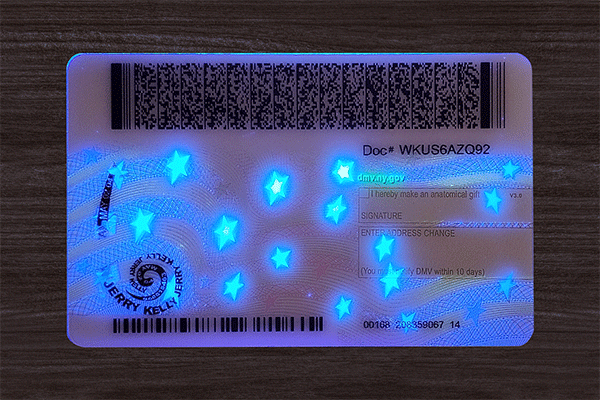
UV Printing & Invisible Features
UV printing is another advanced feature used for security and verification.
What It Includes:
- Invisible text or images
- Patterns visible only under UV light
Advantages:
- Adds hidden layers of security
- Helps prevent duplication
- Easy verification with UV scanners
These features are commonly used in high-security environments and official identification systems.
High-Resolution Photo & Personalization
A modern scannable ID card must include a clear and professional image.
Essential Elements:
- High-resolution photo
- Accurate personal details
- Consistent formatting
Why It Matters:
- Ensures easy visual identification
- Reduces chances of rejection
- Improves credibility
Advanced printing technologies now allow for laser engraving and micro-text printing, further enhancing personalization.
Laser Engraving Technology
Laser engraving is one of the most secure printing methods available.
Features:
- Permanent marking
- Resistant to tampering
- High precision
Benefits:
- Cannot be easily altered
- Long-lasting clarity
- Adds premium quality to the card
This technology is widely used in modern identification systems due to its reliability.
Edge-to-Edge Printing
Gone are the days of IDs with visible borders.
Modern Standard:
- Full-bleed (edge-to-edge) printing
Advantages:
- Professional appearance
- Harder to tamper with
- Maximizes space for design and data
This feature ensures the card looks modern and authentic.
Data Accuracy & Formatting
Even the most advanced ID card is useless if the data is incorrect.
Key Considerations:
- Correct encoding of barcode data
- Proper formatting of text fields
- Consistency across all elements
Why It Matters:
- Ensures successful scans
- Avoids system errors
- Maintains credibility
Compliance with Scanning Standards
Modern scannable ID cards must comply with recognized standards.
Examples:
- ISO/IEC standards for card design
- Barcode formatting guidelines
Benefits:
- Ensures compatibility with scanners
- Reduces rejection rates
- Improves reliability across systems
Anti-Counterfeiting Measures
Security is a top priority in 2026.
Top Features:
- Microtext printing
- Guilloche patterns
- Ghost images
- Serial numbers
Why It Matters:
- Prevents duplication
- Enhances trust
- Protects identity data
Modern IDs combine multiple security layers to create a tamper-resistant design.
Smart Design & Layout
Design plays a crucial role in usability.
Best Practices:
- Clean and organized layout
- Easy-to-read fonts
- Proper spacing
Benefits:
- Quick information access
- Professional look
- Better scanning alignment
Environmental Resistance
Modern ID cards are built to withstand various conditions.
Resistant To:
- Water
- Heat
- Scratches
- UV exposure
Why It Matters:
- Extends lifespan
- Maintains functionality
- Prevents data degradation
Future-Ready Features
As technology evolves, ID cards are becoming smarter.
Emerging Trends:
- Biometric integration
- Blockchain verification
- Mobile compatibility
These features ensure that ID cards remain relevant in a rapidly changing digital landscape.
FAQs
1. What makes an ID card scannable?
A scannable ID card includes a barcode or QR code encoded with readable data that can be processed by scanners or mobile devices.
2. Which barcode is commonly used in ID cards?
PDF417 is one of the most widely used barcode formats for identification cards.
3. Are holograms necessary on ID cards?
Yes, holograms add an important layer of security and help verify authenticity.
4. What is the role of RFID in ID cards?
RFID enables contactless scanning and secure data storage, making the card more versatile.
5. How long does a modern ID card last?
With high-quality materials, a modern ID card can last several years without losing functionality.
Conclusion
Modern scannable ID cards in 2026 are a blend of advanced technology, security, and durability. From high-quality barcodes and smart chips to holographic overlays and UV printing, every feature plays a critical role in ensuring the card performs efficiently and securely.
When choosing or evaluating an ID card, it’s essential to focus on accuracy, durability, and security features. A well-designed card not only ensures smooth scanning but also builds trust and reliability in any system it is used in.
By understanding these key features, you can make informed decisions and ensure that your ID cards meet modern standards and expectations.